
Choosing Manhole Tool Solutions That Fit the Job
August 13, 2026
Opening a manhole is rarely as simple as lifting a lid and setting it aside. Covers and frames can be extremely heavy, difficult to grip, and affected by years of exposure to moisture, dirt, road debris, and changing weather. The surrounding work area may also be uneven, congested, or located near active traffic.
These conditions make it important for utility crews, contractors, and municipal teams to use manhole tool solutions designed for the work being performed. The right equipment can help create a more controlled lifting process while reducing reliance on manual force and improvised methods.
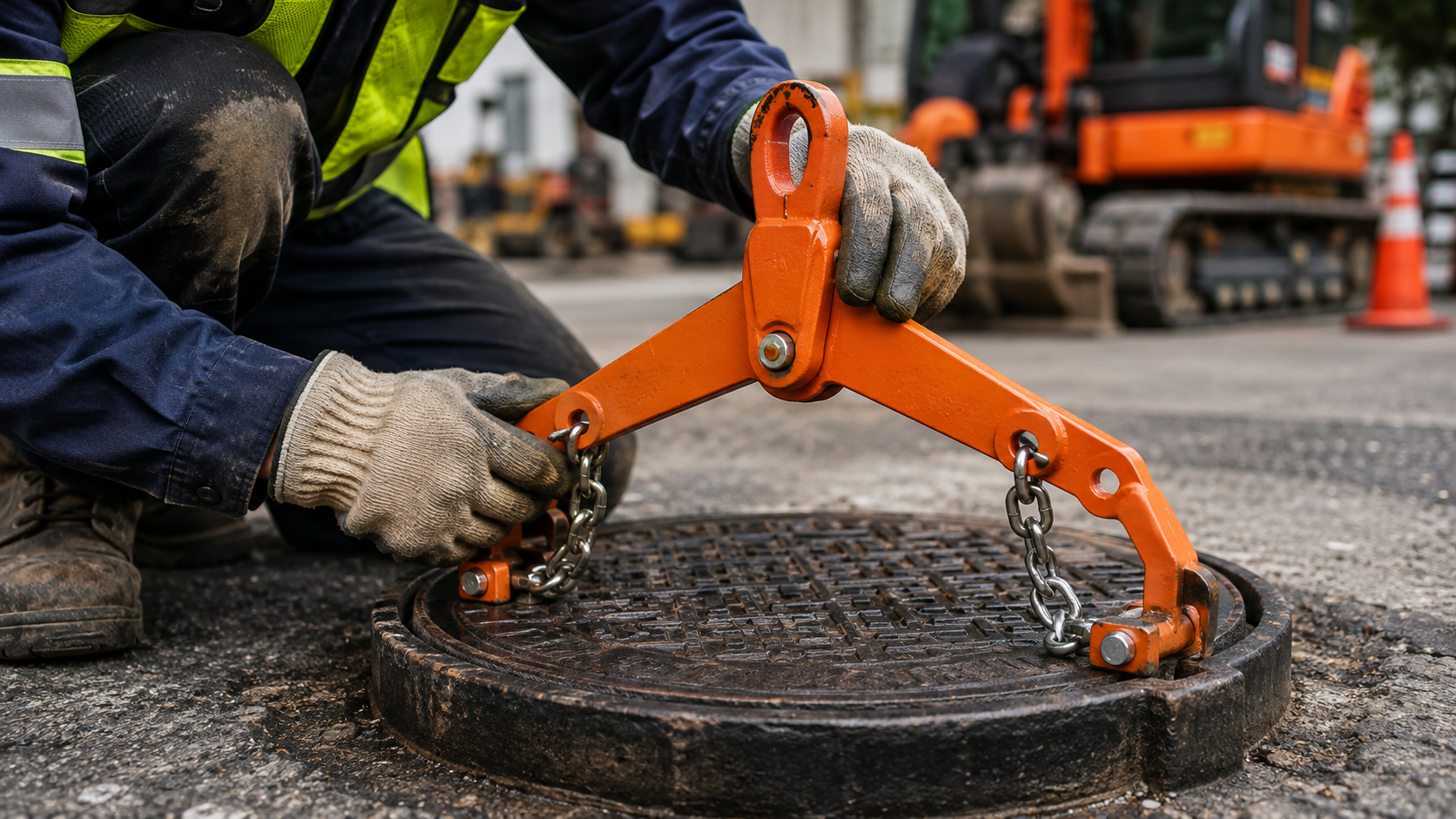
Keltic Industries offers the Chicago Claw, a purpose-built tool developed to assist with lifting manhole lids and frames. Available in two-leg and four-leg configurations, it gives professionals options for addressing different utility access and lifting needs.
Why Specialized Manhole Tools Matter
Manhole components present several handling challenges at once. They are heavy, sit close to the ground, and often provide limited space for workers to establish a secure grip. Some covers may also be stuck because of corrosion, compacted debris, pavement buildup, or extended periods without movement.
When crews do not have suitable equipment available, they may turn to pry bars, hooks, chains, or other methods that were not designed specifically for the task. These approaches can require considerable physical effort and may provide inconsistent control once the component begins to move.
Purpose-built manhole lifting tools help address the unique shape, position, and weight of these components. They allow the crew to plan the lift around suitable equipment instead of depending primarily on worker strength.
Better Control Over Heavy Components
A manhole lid or frame can shift, tilt, or rotate as it is raised. If the connection is unstable, workers may have difficulty predicting how the load will move.
An appropriate lifting tool can help establish a controlled connection between the component and the lifting machinery. This makes it easier to raise and reposition the load while keeping workers away from common pinch, strain, and crush hazards.
Although no tool removes every risk, better control can support a safer and more organized lifting operation.
Less Dependence on Manual Force
Traditional lifting methods may require multiple workers to bend, pull, pry, and guide the component. Coordinating these movements can be difficult, especially when the cover does not release as expected.
Using mechanical assistance can reduce the physical effort required from individual workers. It may also help crews avoid awkward movements that place unnecessary stress on the back, shoulders, arms, hands, and knees.
The goal is not simply to make the component easier to move. It is to create a process that workers can perform more consistently without depending on strength or luck.
A More Repeatable Work Process
Utility teams may need to access several manholes during a shift. If each cover requires a different improvised approach, the work can become unpredictable and time-consuming.
A suitable manhole tool solution gives crews a clearer process to follow. They can inspect the area, position the equipment, establish the connection, secure the work zone, and complete the lift using defined responsibilities.
A repeatable process can help supervisors reinforce training, identify problems, and maintain more consistent jobsite practices.
Consider the Type of Work Being Performed
Not every manhole lifting task has the same requirements. Before choosing equipment, buyers should consider the components their crews handle, the machinery available, and the environments where the work takes place.
Keltic Industries offers both two-leg and four-leg Chicago Claw options. Having more than one configuration allows companies to explore a tool that better matches the intended application.
Identify What Must Be Lifted
Begin by identifying whether crews typically handle manhole covers, frames, or both. Consider the common shapes, dimensions, conditions, and access points found across the service area.
A tool suitable for one component may not be the best choice for another. Buyers should confirm that the selected equipment is intended for the specific lifting task and follow the manufacturer’s requirements for proper use.
Review the Available Machinery
Manhole lifting equipment does not operate by itself. The company must also consider the machinery used to raise and move the load.
The complete lifting setup should be appropriate for the task. This includes the machine, connection points, chains, hooks, and other components involved. Each part should be inspected and used within its intended limits.
Thinking about the full system helps prevent situations where a suitable lifting tool is paired with incompatible or inadequate equipment.
Evaluate Typical Worksite Conditions
A wide construction area may provide plenty of room for machinery and worker movement. A manhole located on a narrow street, crowded facility, or confined service area may require a more carefully planned setup.
Consider whether crews commonly work around traffic, pedestrians, parked vehicles, snow, standing water, slopes, or uneven pavement. These conditions can affect equipment positioning and the amount of space needed to establish a safe lifting zone.
Features to Consider When Comparing Manhole Tool Solutions
Selecting a tool should involve more than comparing appearances or choosing the option that seems easiest to purchase. Companies should evaluate how the equipment fits their work process and safety expectations.
Purpose-Built Design
A tool designed specifically for lifting manhole components is generally better suited to the task than equipment adapted from another use. A purpose-built design considers how the tool connects to the component and how the load behaves during lifting.
The Chicago Claw was developed after years of experience with the inefficiencies and dangers of traditional utility access methods. This field-focused background helped Keltic Industries create a practical solution for professionals who regularly work with manhole lids and frames.
Straightforward Setup
Equipment should be understandable for trained workers to inspect and position. An overly complicated setup can create delays or increase the chance of missing an important step.
A straightforward process can make training easier and help crews maintain consistent procedures from one location to another. Workers should still receive proper instruction and follow all applicable safety requirements.
Durability for Field Conditions
Manhole tools are used around pavement, dirt, water, machinery, and other demanding conditions. Equipment should be constructed for its intended working environment and maintained according to the manufacturer’s instructions.
Regular inspection remains essential. Crews should check for visible damage, deformation, worn connection points, loose hardware, corrosion, or other conditions that could affect safe operation.
Fit With Existing Procedures
The right tool should support the company’s established safety and operating procedures. Buyers should consider how the equipment will be transported, stored, inspected, assigned, and documented.
It is also helpful to determine who will use the equipment, what training will be required, and how supervisors will verify that it is being operated correctly.
Safe Results Depend on More Than the Tool
Even the best manhole lifting equipment must be paired with responsible jobsite practices. Crews should never assume that specialized equipment makes planning or attention unnecessary.
Inspect Before Every Use
The Chicago Claw, lifting machinery, chains, hooks, and related components should be inspected before the operation begins. Any equipment that appears damaged, excessively worn, or unsuitable should be removed from service and properly evaluated.
The manhole component and surrounding pavement should also be checked. Visible damage or unstable material can affect how the load responds.
Secure the Work Area
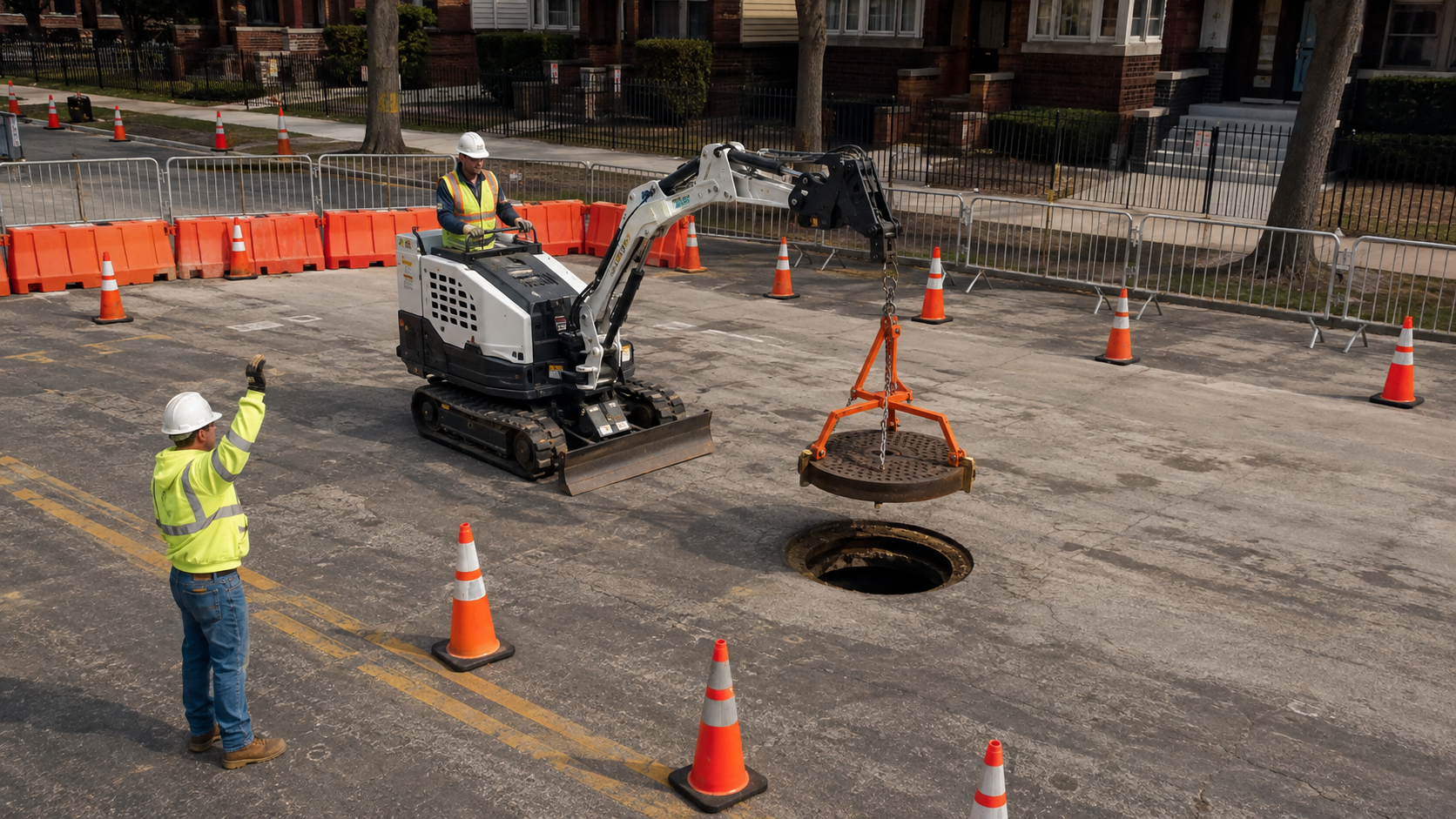
A controlled work zone helps protect the crew and people nearby. Traffic cones, temporary barriers, signs, or other controls may be necessary depending on the location.
Workers who are not directly involved in the operation should remain clear of the lifting area. No one should stand beneath a suspended load or place hands and feet near potential pinch points.
Assign Clear Responsibilities
The crew should know who is operating the machinery, who is providing signals, and where each team member should stand. Communication should be clear before lifting begins.
If the operator loses sight of the signal worker or receives conflicting directions, the operation should stop until communication is restored.
Use Appropriate Protective Equipment
Workers should wear personal protective equipment suitable for the task and jobsite. This may include gloves, safety footwear, high-visibility clothing, hard hats, safety glasses, and other required protection.
Protective equipment works best as part of a complete safety process that includes training, planning, inspections, and appropriate lifting tools.
The Right Tools Can Support the Entire Operation
Appropriate manhole tool solutions can provide benefits beyond completing a single lift. They can help companies create more consistent procedures, reduce unnecessary physical effort, and give workers a practical alternative to outdated handling methods.
A more controlled process may also help crews manage their time and resources more effectively. Instead of assigning additional workers to struggle with a heavy component, the company can use suitable equipment and clearly defined roles.
This approach supports both safety and productivity. It also shows employees that the company is willing to invest in tools that help them perform demanding work more responsibly.
Find the Right Chicago Claw for Your Needs
Choosing manhole lifting equipment should begin with a clear understanding of the work your crews perform. Consider the components being lifted, available machinery, typical jobsite conditions, and the procedures workers will follow.
Keltic Industries brings more than 30 years of plumbing and utility business experience to its equipment solutions. Its Chicago Claw products are designed to give professionals a safer and more efficient way to handle manhole lids and frames.
Contact Keltic Industries to discuss the two-leg and four-leg Chicago Claw options and request a quote for the manhole tool solution that best fits your operation.