
How the Right Manhole Lifting Equipment Helps Prevent Workplace Injuries
August 13, 2026
Lifting and moving a manhole cover or frame may look like a routine part of utility work, but it can place workers in a dangerous situation when the wrong method or equipment is used. These components are heavy, awkwardly shaped, and often difficult to grip. Dirt, corrosion, traffic, weather, and limited workspace can make the task even more challenging.
Using appropriate manhole lifting equipment helps crews approach the job with greater control. Instead of relying heavily on physical strength, improvised tools, or several workers coordinating a manual lift, a purpose-built tool can help create a safer and more consistent process.
Keltic Industries developed the Chicago Claw to support professionals who regularly handle manhole lids and frames. Available in two-leg and four-leg configurations, the equipment is designed to help crews complete these difficult lifting tasks more safely and efficiently.
Why the Correct Equipment Matters
Selecting the correct tool is not simply a matter of convenience. It is an important part of workplace injury prevention.
When workers attempt to lift heavy infrastructure components manually, they may be exposed to sudden movement, unstable footing, awkward body positions, and unpredictable load shifts. Even an experienced worker can be injured if a cover sticks, breaks free unexpectedly, or slips during repositioning.
The correct equipment can help reduce direct physical contact with the load and provide a more secure way to control it. This allows workers to focus on safe setup, communication, and movement instead of depending primarily on strength.
Reducing Strain From Manual Lifting
Heavy lifting can place significant stress on the back, shoulders, arms, knees, and other parts of the body. Manhole covers and frames can be especially difficult to handle because workers often have to bend, pull, twist, or reach from an uncomfortable position.
These movements become more hazardous when the component is stuck or partially buried. A worker may apply increasing force without knowing when the cover will suddenly move. If it releases without warning, the worker may lose balance or experience a sharp strain.
Purpose-built manhole lifting equipment helps reduce the need for this type of forceful manual handling. The load can be engaged and lifted using suitable machinery, helping crews avoid many of the movements associated with strains and overexertion.
Helping Protect Hands and Fingers
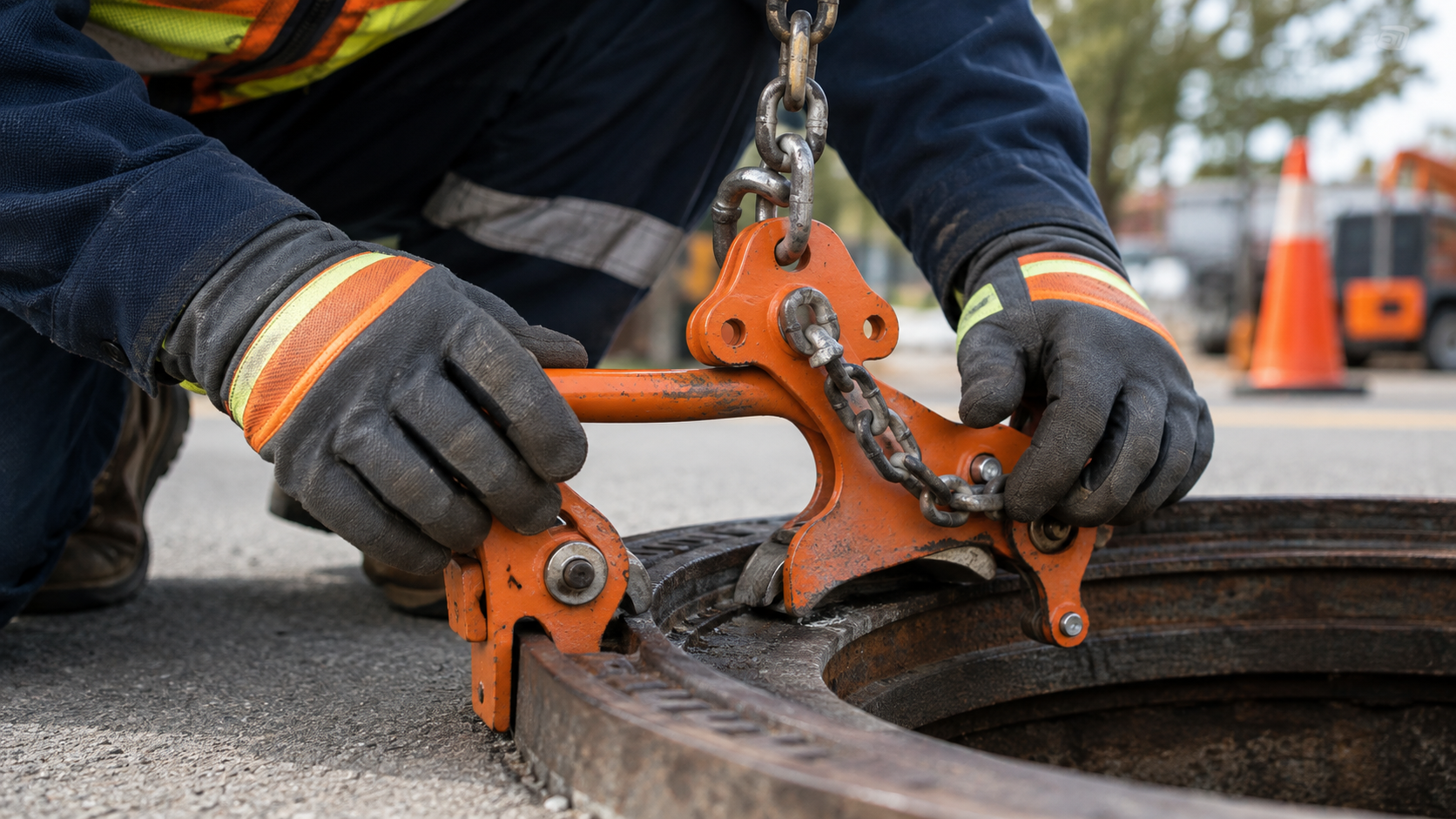
Hands and fingers are particularly vulnerable when workers are lifting, guiding, or lowering a manhole cover. A small shift can create a dangerous pinch point between the cover, frame, pavement, or tool.
Trying to insert hands beneath a cover or hold its edge during movement can increase the risk of crushing and pinching injuries. Improvised hooks, pry bars, and other tools may also slip when they are not designed for the load or lifting point.
A proper manhole cover lifting tool helps workers maintain greater separation from these hazardous areas. While safe positioning and attention remain essential, reducing the need to place hands close to the load can make a meaningful difference.
Improving Control During the Lift
A heavy load that swings, tilts, or shifts unexpectedly can endanger everyone nearby. The lifting equipment must engage the component correctly and remain stable throughout the operation.
Equipment designed specifically for manhole handling can provide a more controlled connection than makeshift lifting methods. Better control helps the operator raise, move, and lower the component more predictably.
No tool can eliminate every risk. However, choosing equipment suited to the task can help reduce uncertainty and give the crew a clearer, repeatable lifting process.
Match the Equipment to the Job
Not every manhole lifting task is identical. Covers and frames can differ in size, shape, condition, weight, and accessibility. Worksites can also range from open construction areas to busy roadways with limited room.
Before beginning the lift, crews should evaluate the component and surrounding environment. The equipment selected should be appropriate for the specific task and used according to the manufacturer’s instructions.
Keltic Industries offers two-leg and four-leg Chicago Claw options, allowing customers to explore a configuration that fits their operational needs. The correct selection should be based on the intended application, lifting setup, and jobsite requirements.
Safe Equipment Still Requires a Safe Process
Purchasing appropriate equipment is only one part of preventing injuries at work. The tool must also be inspected, set up, and operated correctly.
A strong safety process combines suitable equipment with planning, worker training, clear communication, and jobsite awareness.
Assess the Work Area Before Starting
Crews should examine the area for traffic, pedestrians, uneven pavement, standing water, snow, loose debris, overhead hazards, and other conditions that could affect the operation.
The manhole cover or frame should also be checked for visible damage, severe corrosion, unstable surrounding material, or anything else that could change how the load behaves. If the condition is uncertain, the team should stop and determine the safest approach before proceeding.
Inspect the Equipment
Lifting equipment and its connected components should be inspected before use. Workers should look for visible damage, excessive wear, loose hardware, deformation, or other concerns that could affect performance.
Chains, hooks, attachment points, and the lifting machine should also be checked as required. Equipment that appears damaged or unsuitable should not be used until it has been properly evaluated.
Routine inspection helps identify problems before the load is lifted and supports more dependable operation over time.
Establish Clear Communication
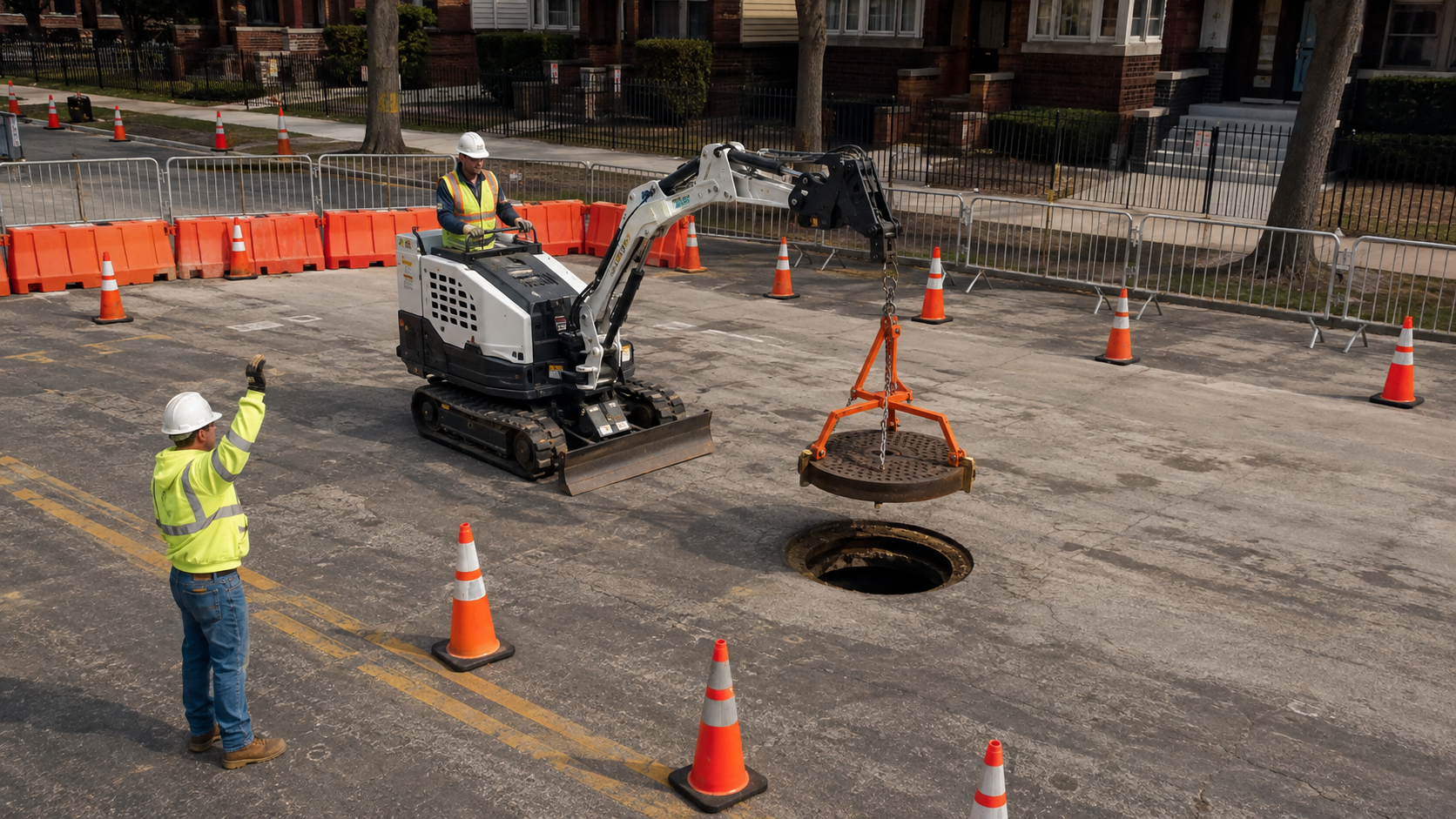
Everyone involved in the lift should understand the plan before work begins. The team should know who is operating the machinery, who is providing signals, where other workers should stand, and where the component will be placed.
Clear communication becomes especially important when visibility is limited or multiple workers are nearby. Only designated personnel should direct the operator, and the operation should stop if instructions are unclear.
Maintain a Safe Distance
Workers should avoid standing beneath or too close to a suspended load. An appropriate work zone should be established to keep unauthorized personnel, pedestrians, and vehicles away from the lifting area.
Hands, feet, and other body parts should remain clear of potential pinch and crush points. Workers should also avoid trying to stop a swinging load with their bodies.
Use Proper Protective Equipment
Workers should wear personal protective equipment appropriate for the jobsite and task. Depending on the work environment, this may include gloves, safety footwear, high-visibility clothing, hard hats, and eye protection.
Personal protective equipment supports safety, but it should not be treated as a replacement for proper tools and procedures. The strongest approach combines all three.
How Better Tools Support Productivity
Safer equipment can also contribute to a more efficient workday. When crews have a dependable way to handle manhole lids and frames, they can spend less time struggling with manual methods or arranging several workers around a difficult lift.
A more consistent setup may make it easier to plan each task, assign responsibilities, and move through multiple locations. Reducing unnecessary physical effort can also help workers conserve energy for other essential duties.
Efficiency should never come at the expense of safety. In many cases, the right equipment supports both goals by replacing an awkward manual process with a more controlled one.
Supporting the Business Beyond the Worksite
A workplace injury can affect far more than the person involved. It can interrupt schedules, reduce available staffing, increase administrative work, and create additional costs for the company.
There may also be effects on worker confidence and morale. Employees want to know that the company is taking practical steps to protect them.
Investing in appropriate workplace injury prevention equipment demonstrates that safety is part of how the business operates. It can help support a stronger safety culture while protecting productivity and the company’s bottom line.
Build a Safer Approach to Manhole Handling
Traditional lifting methods may feel familiar, but familiarity does not always make a process safe. When a task involves a heavy and difficult-to-handle component, workers should not have to depend on strength, luck, or an improvised solution.
Purpose-built manhole lifting equipment can help reduce manual handling, improve control, and keep workers farther from common pinch and crush points. When combined with training, inspections, communication, and proper jobsite procedures, it becomes an important part of a safer operation.
Keltic Industries offers the Chicago Claw in two-leg and four-leg configurations for professionals who need a more effective way to lift manhole lids and frames. Contact Keltic Industries to learn more about the available options and request a quote for the equipment that fits your work.